
Tarneeb is a four-player partnership trick-taking card game played with a standard 52-card deck. It belongs to the same family as Whist, Spades and Bridge, and it is one of the most popular card games across the Levant — Lebanon, Syria, Palestine and Jordan — as well as Iraq, the Gulf and Arab communities around the world. The name comes from the Arabic word for trump, the suit that beats every other suit for the round.
What makes Tarneeb special is the auction. Every round, players compete to promise how many of the 13 tricks their team will take, and only the highest bidder gets to name the trump suit. Bid too low and the other team takes the contract; bid too high and your team loses the full value of its promise. Add a fixed partner sitting across the table, and every card you play becomes a conversation with your teammate.
On Dananeer you can play Tarneeb online free on iPhone, Android or the web at play.dananeer.io. Open a private room for your friends and talk across the table with live voice and video chat, get matched with players on any device thanks to cross-play, or practise Tarneeb offline against bots whenever you like. Dananeer is free to play and never involves real-money gambling.
Cards and card ranking
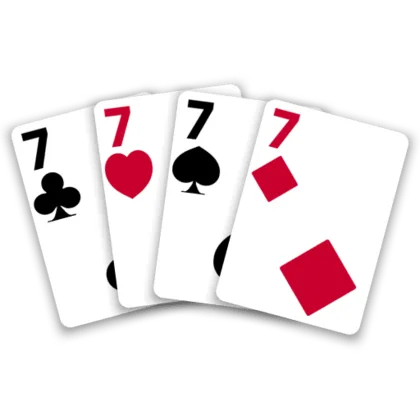
Tarneeb uses one standard 52-card deck with no jokers: four suits of thirteen cards each. Within every suit the cards rank from low to high: 2, 3, 4, 5, 6, 7, 8, 9, 10, Jack, Queen, King, Ace. The Ace is always the highest card.
In base Tarneeb the suits have no ranking against each other. A card only matters if it belongs to the suit that was led or to the trump suit — a card of any other suit can never win a trick, however high it is.
Setup and the deal
Four players form two teams of two, and partners sit opposite each other, so play alternates between the teams around the table. Partnerships stay the same for the whole match.
- The whole 52-card deck is shuffled.
- Each player receives 13 cards. The entire deck is used — there is no stock pile and no face-up card.
- Every hand is private: you only see your own 13 cards.
- The dealer role moves one seat clockwise after every round, and bidding always starts with the player to the dealer’s left.
Objective of the game
The team that wins the auction (the buying team) must take at least as many tricks as it bid, counting both partners’ tricks together. The defending team’s goal is to stop them: defenders only score when they set the buyers below their bid.
Across rounds, the aim is to be the team with the higher running total when the match ends at 31 points.
Bidding (the auction)
Each player, starting left of the dealer and going clockwise, either bids a number of tricks from 7 to 13 or passes. A bid means “my team will take at least this many of the 13 tricks.” There is no suit in the bid — trump is chosen only after the auction.
- Every new bid must be strictly higher than the current highest bid.
- If you pass, you are out of the auction for the rest of that round.
- If your bid is overtaken, you may come back in later with a higher bid.
- The auction ends when three players have passed and one bid stands.
- A bid of 13 is the maximum and closes the auction immediately.
- Someone must play: if the first three players all pass, the fourth player cannot pass and must bid at least 7. There is no re-deal in Tarneeb.
Choosing the trump (tarneeb)
The winner of the auction — and only the winner — names the trump suit. They may pick any of the four suits, whatever they hold, and nobody can veto the choice. There is no no-trump option in base Tarneeb.
Once trump is named, the contract is fixed: the winner and their partner are the buying team and owe the bid together, and the auction winner leads the first trick.
Playing the tricks
You must follow suit whenever you can. The player who leads may play any card, including a trump; the others then play one card each, clockwise.
- If you hold a card of the suit that was led, you must play that suit.
- If you have none of the led suit, you may play any card — a trump or a discard.
- You are never forced to trump, and never forced to play higher than the cards already on the table.
- If any trump was played, the highest trump wins the trick; otherwise the highest card of the led suit wins.
- The winner of each trick leads the next one. After 13 tricks the round is over.
Scoring
Scoring is per team. If the buying team makes its bid, it scores the number of tricks it actually took — bid 7 and take 9, and you score 9. Taking all 13 tricks (Kaboot) on a lower bid scores 16, and a made bid of 13 scores 26. The defenders score nothing when the contract is made.
If the buying team falls short, it loses the full value of its bid (minus the bid, not minus the tricks it took) — or 16 for a failed bid of 13. The defenders then score the tricks they took, or 16 if they swept all 13. Totals can go negative.
| Bid | Buyers’ tricks | Defenders’ tricks | Buying team | Defending team |
|---|---|---|---|---|
| 7 | 7 | 6 | +7 | 0 |
| 7 | 9 | 4 | +9 | 0 |
| 7 | 13 | 0 | +16 (Kaboot) | 0 |
| 7 | 6 | 7 | −7 | +7 |
| 11 | 4 | 9 | −11 | +9 |
| 11 | 0 | 13 | −11 | +16 |
| 13 | 13 | 0 | +26 | 0 |
| 13 | 12 | 1 | −16 | +1 |
Winning the match
Rounds continue — with a fresh deal and the dealer moving one seat clockwise — until a team’s running total reaches 31. The match then ends and the team with the higher total wins; exactly equal totals are a draw.
On Dananeer you can also play a quick one-round match, or set your own target score and turn timer in a private room with friends.
Strategy tips
- Count your sure tricks before bidding. Aces, guarded Kings and a long suit you could name as trump are what win a contract — remember your partner’s tricks count toward the bid too.
- Because a made contract scores the tricks you actually take, winning the auction at 7 and taking 9 still earns 9. Do not overbid just to “win” the auction; a failed bid costs its full value.
- Name your longest, strongest suit as trump. Leading high trumps early pulls the opponents’ trumps so your side-suit winners can take tricks safely later.
- When you run out of the led suit, you do not have to trump. Discard a useless low card if your partner is already winning the trick.
- On defence, every trick counts: if you can set the buyers, you bank your tricks and they lose their whole bid.
- Watch what your partner leads and discards — Tarneeb is a team game, and the cards played are your only signals.
Frequently asked questions
How many points do you need to win Tarneeb?
The standard match is played to 31 points. Once a team’s total reaches 31, the match ends and the team with the higher total wins.
What is Kaboot in Tarneeb?
Kaboot means taking all 13 tricks in a round. On a bid below 13 it scores 16 points, and a made bid of 13 scores 26. Defenders who sweep all 13 tricks against a failed contract also score 16.
What is the minimum bid in Tarneeb?
The minimum bid is 7 tricks and the maximum is 13. If the first three players pass, the fourth player must bid at least 7, so every hand is played.
Who chooses the trump suit in Tarneeb?
The player who wins the auction names the trump suit, choosing freely from any of the four suits. That player also leads the first trick.
Do you have to trump in Tarneeb if you can’t follow suit?
No. You must follow the led suit if you can, but if you have none of it you may play any card — a trump or a discard. You are never forced to trump or to beat the cards on the table.
Do the defenders score points in Tarneeb?
Only when they set the buying team. If the contract is made, the defenders score 0 no matter how many tricks they took.
Can I play Tarneeb online with friends?
Yes. On Dananeer you can create a private room, invite friends and play Tarneeb online free with live voice and video chat, across iPhone, Android and the web.
Can I play Tarneeb offline?
Yes. Dananeer lets you play Tarneeb offline against bots, which is a great way to learn the bidding and scoring before playing real opponents.